
5-Hour Walking Route Through Ronda: A Budget Guide
Updated 14 September 2026
Ronda is one of those towns you shouldn’t rush. The distances between its main landmarks are short, but you’ll keep running into small detours, balconies and streets that make you want to stop. In about five hours you can do a fairly complete route, seeing the essentials while still leaving time to sit down for a drink.
The plan below is designed to be done entirely on foot, without spending too much, and without turning the visit into a sprint from one monument to the next.
This route comes from a real visit: we did it on a Saturday morning with the family. We parked at a car park near the centre and walked from there, stringing together viewpoints, the area around the Puente Nuevo and the streets of the old town — which is, more or less, the backbone of this itinerary.
Duration: about 5 hours Approximate distance: 4-5 km, depending on detours Difficulty: easy, though there are stairs and some slopes Recommended budget: €10-13 per person Best time to go: early morning, or from mid-afternoon onward, especially in high season. This itinerary is timed from a 9:00 am start; if you’re visiting at the height of summer, moving the start to 8:00-8:30 am helps you avoid the hottest part of the day toward the end.
Prices and opening hours for the monuments can change. The costs listed here are checked against municipal tourism information available in 2026.
9:00 am — Alameda del Tajo and Paseo de Blas Infante
Duration: 25-30 minutes · Cost: free
I’d start the route at the Alameda del Tajo, next to the bullring. It’s a great place to begin because you haven’t entered the old town yet, and you already have one of Ronda’s great protagonists right in front of you: the Tajo gorge.
The Alameda is a 19th-century tree-lined promenade that runs almost to the edge of the cliff, with several paths and balconies from which you can take in the Serranía de Ronda.
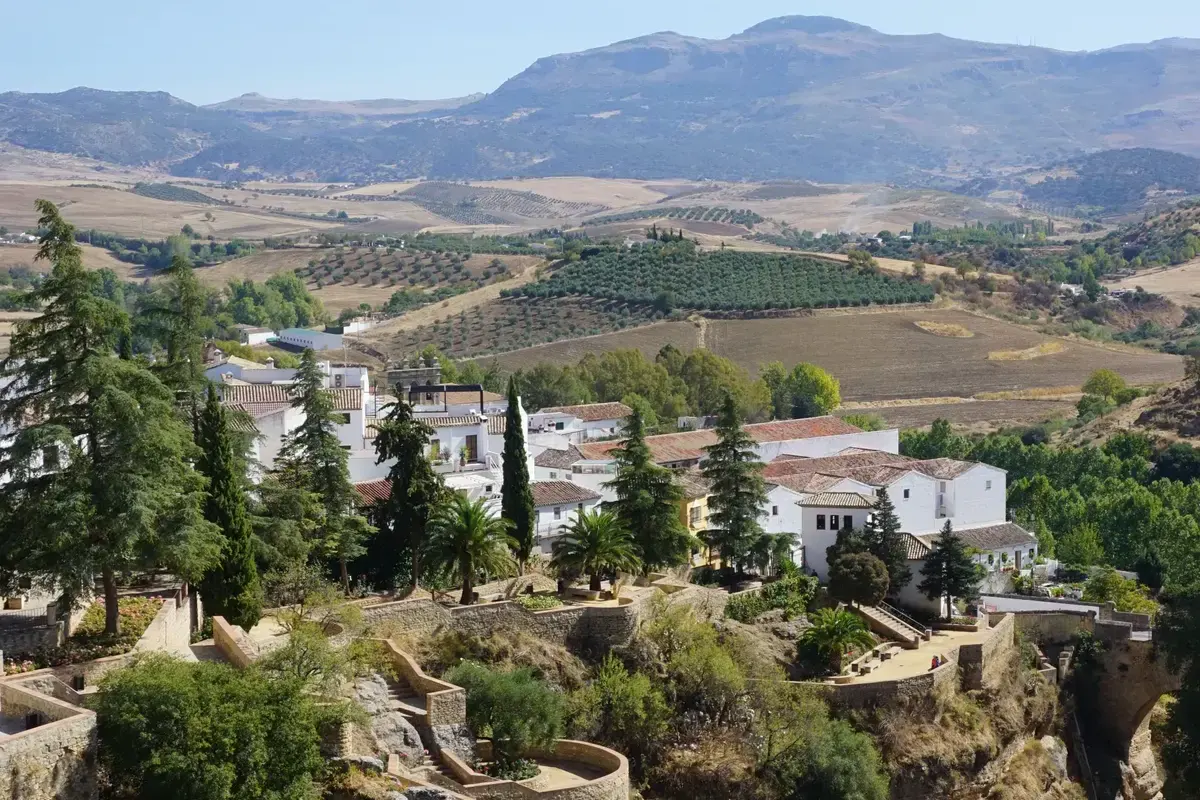
📸 A must-take photo: head to the balcony at the far end of the Alameda, next to the Paseo de los Ingleses. Don’t settle for the typical Puente Nuevo shot — from here it’s worth photographing the wide-open landscape of the Serranía instead.
Tip: in summer, this part of the route works especially well early in the day. The Alameda’s trees give shade, and the promenade is usually still quiet at that hour.
9:30 am — Puente Nuevo: the highlight of the route
Duration: 30-35 minutes · Cost: free
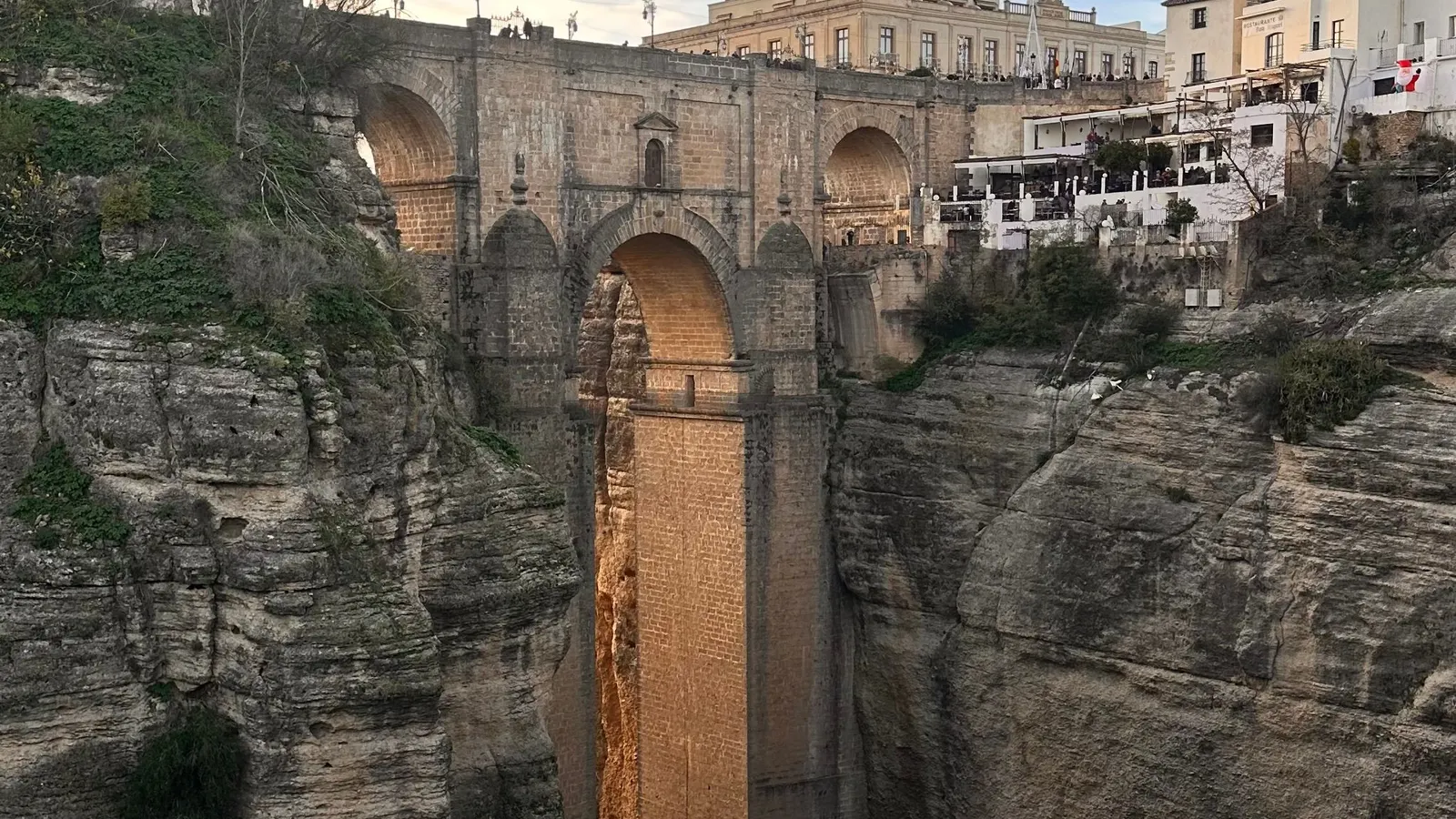
Now we reach the spot you’ve probably seen in more photos of Ronda than anywhere else. Construction on the current bridge began in 1751 and finished in 1793, after more than four decades of work. The bridge rises about 98 metres above the Tajo and was key to connecting the old town with the Mercadillo quarter.
Cross the bridge slowly, from one side to the other. Don’t rush to take the photo and leave — look at it from both sides, because the views change quite a bit.
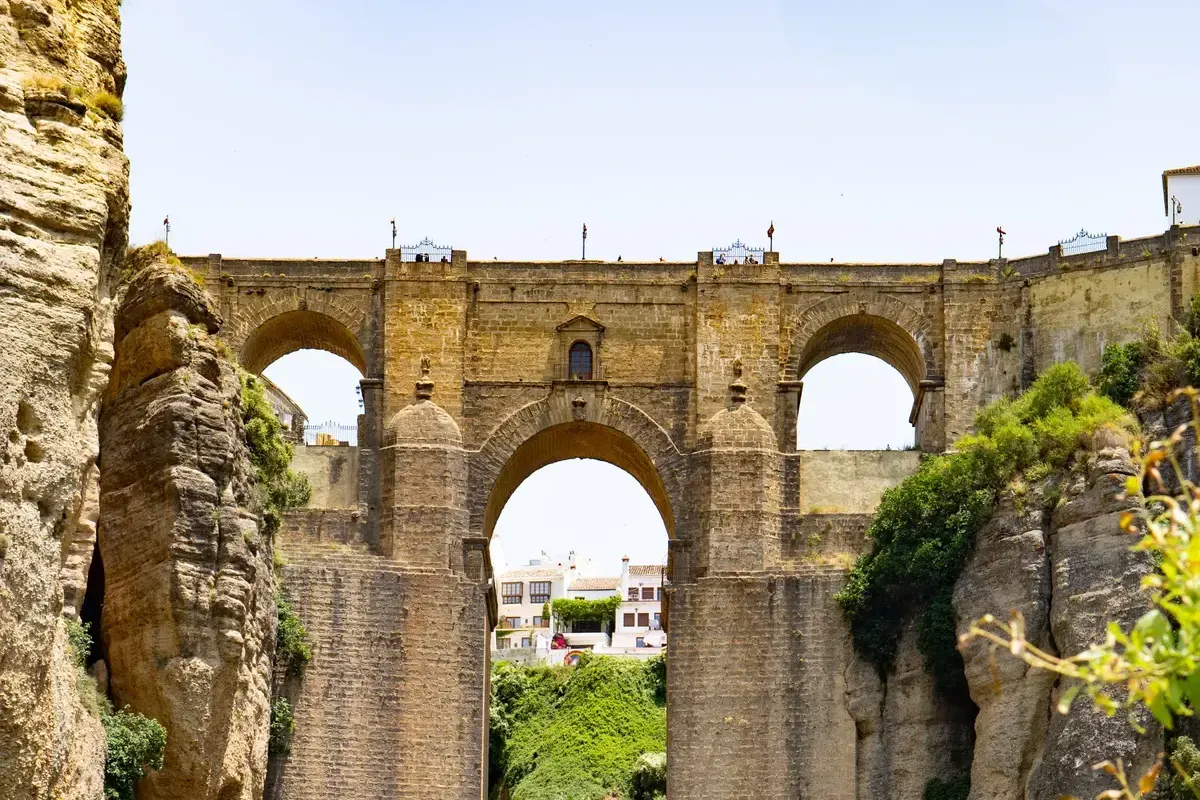
📸 Three shots worth chasing:
- From the bridge itself — the classic view down the Guadalevín gorge.
- Mirador de Aldehuela — just past the bridge on the way to the old town, one of the best spots to photograph the Puente Nuevo from the side and really appreciate its size.
- From the bottom of the Tajo — if you have more time on another day, there’s a path down into the gorge. For this five-hour route I wouldn’t recommend it: it adds a fair amount of time and effort.
🎒 Extra, if you have more time (or you’re travelling with family, like we were): following the path down into the gorge takes you to the so-called Puente Romano (“Roman Bridge”), next to the Baños Árabes (Arab Baths). The name is a bit misleading — despite what it says, it’s actually a construction from the Moorish period, although an earlier Roman bridge on the same spot hasn’t been ruled out. It’s a much quieter area than the Puente Nuevo; the downside is you have to climb the hill back up to the centre afterwards. It falls outside the time budget for this 5-hour route, but if you have some slack, it’s worth it.
10:05 am — Jardines de Cuenca
Duration: 25-30 minutes · Cost: free
From the Puente Nuevo we headed to the Jardines de Cuenca, on the other side of the Tajo: terraced gardens built into the slope of the gorge itself. The perspective changes completely here — instead of looking down at the Tajo from above, you start seeing Ronda from the opposite side.
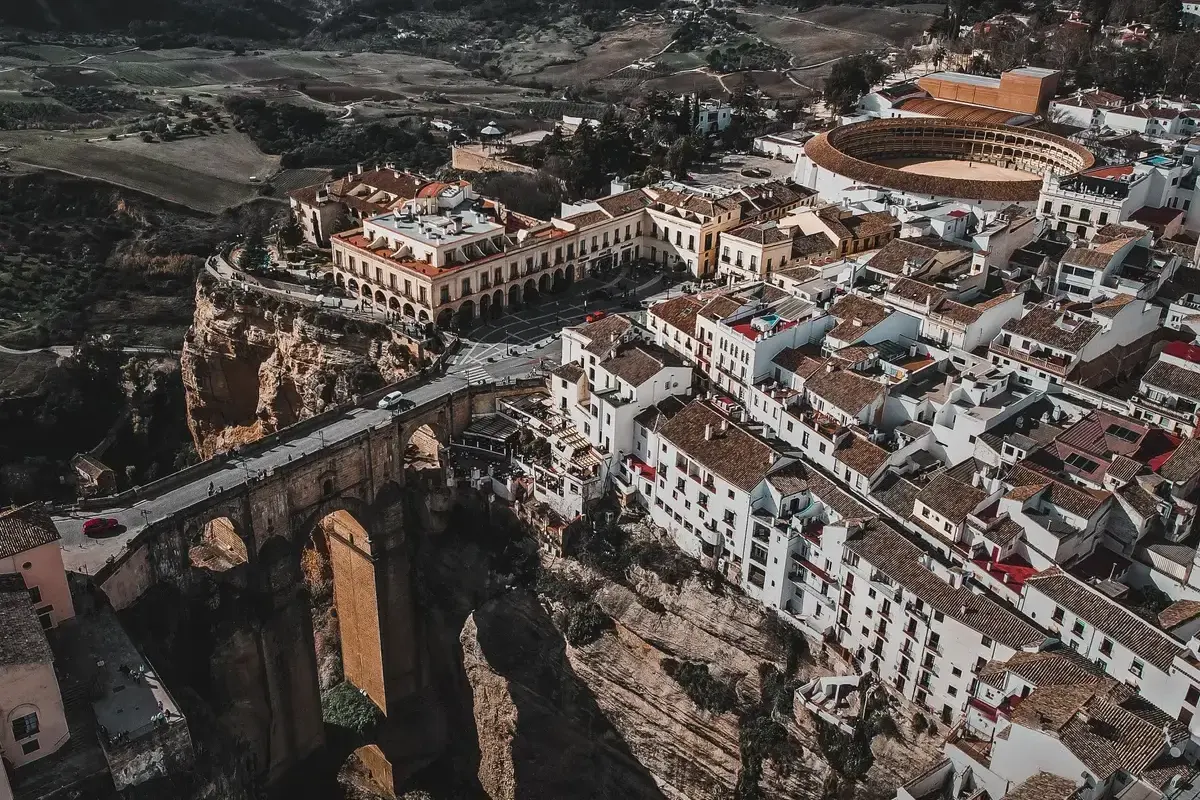
📸 The photo spot I’d look for: from the upper terraces, a shot that takes in the Puente Nuevo, the gorge and the houses of Ronda together. It’s one of the photos that best explains how the town is actually built.
Practical tip: there are quite a few stairs here. You don’t need hiking boots, but comfortable trainers help a lot more than dress shoes.
10:35 am — Casa del Rey Moro and nearby viewpoints
Duration: 25 minutes · Cost: €0 if you don’t go in
From the Jardines de Cuenca you can carry on toward Santo Domingo and the Casa del Rey Moro (House of the Moorish King). You have two options here:
- Budget option: admire the building from outside and carry on to the viewpoints.
- Paid option (€10): historic gardens and an old mine carved into the rock that once descended to the Guadalevín river, historically used to supply water to the town.
For a route built around €10-20 per person, I wouldn’t call this a must — there are other places where that money goes further.
11:00 am — Old town: wandering toward Mondragón
Duration: 35 minutes · Cost: free
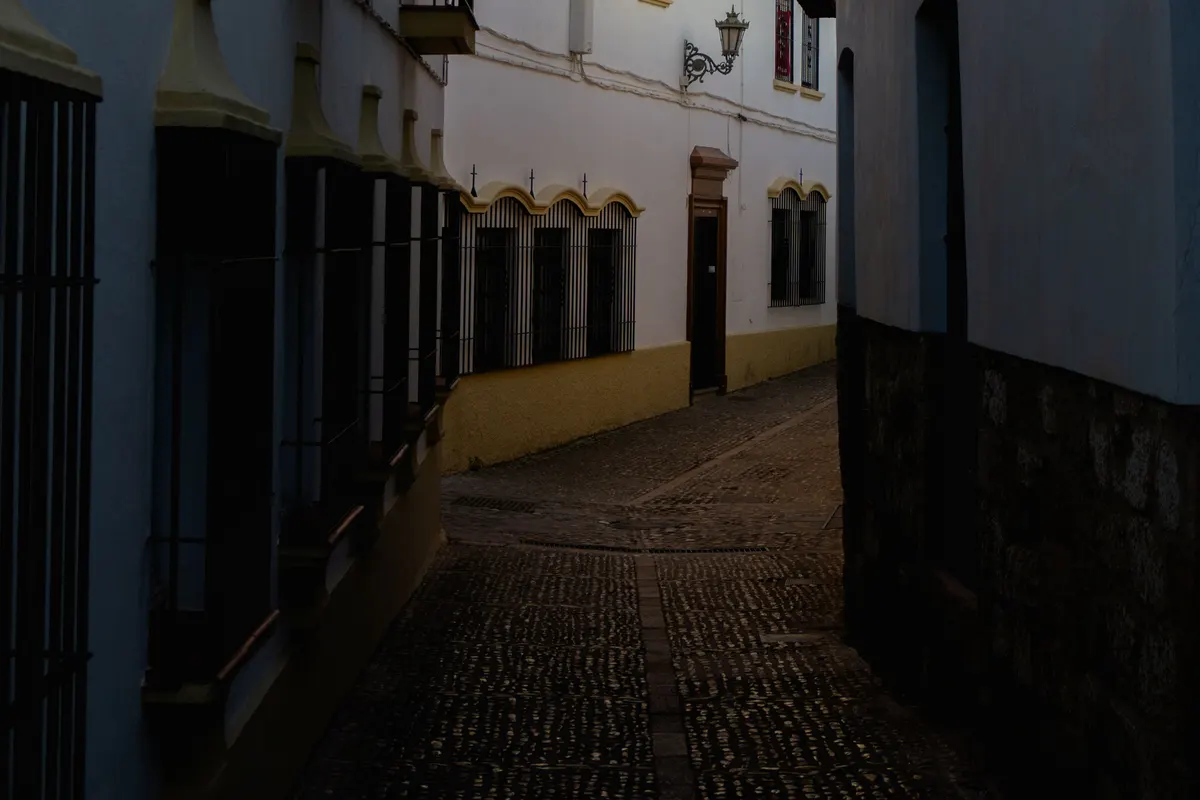
Now it’s time to leave the viewpoints behind for a while and head into the old town, toward Plaza de Mondragón. You don’t need to walk a perfectly straight line here — part of Ronda’s charm is wandering a few metres off course. Look out for whitewashed houses, courtyards, narrow streets, old façades, the corners around Plaza Duquesa de Parcent, the Iglesia de Santa María la Mayor from the outside, and Calle Armiñán.
11:35 am — Palacio de Mondragón
Duration: 30-35 minutes · Cost: €5
We stayed outside, which is already worth the stop on its own — but if you decide to go in, the Palacio de Mondragón is one of Ronda’s most interesting historic buildings: its courtyards and gardens help you understand the mix of Islamic and Christian influences that runs through much of the old town. The individual admission price listed by Ronda’s tourist office is €5, with reduced rates and free entry for EU citizens at certain times.
If you’re only going to pay for one entrance ticket on this route, this is the one I’d prioritise over splitting your budget between several smaller museums — although, as I said, we’d rather save that money for tapas.
📸 Photo (even if you stay outside): the façade and the courtyard visible from the entrance already give you plenty to work with. If you do go in, focus on courtyards, arches and architectural details rather than looking for the classic Tajo panorama, which you can’t actually see from here.
12:10 pm — Plaza Duquesa de Parcent and Santa María la Mayor
Duration: 20-25 minutes · Cost: €0 outside
Head back toward Plaza Duquesa de Parcent, a good spot to sit for a few minutes and watch the town go by. The Iglesia de Santa María la Mayor is especially interesting for the mix of styles that reflects Ronda’s own history. If you find it open, it’s worth considering a look inside, though it’s not essential for this route.
12:35 pm — Tapas stop: El Lechuguita
Duration: 30-35 minutes · Budget: €5-8 per person
For a budget-friendly route, the essential stop is El Lechuguita, on Calle Virgen de los Remedios: a traditional bar where you tick your tapas off on a slip of paper, hand it over, and they bring them to your table. We ordered a few beers and worked our way through tapas — ensaladilla rusa (Russian salad), Ronda-style chorizo, chicken with mojo sauce and a few more — and left very happy. Most tapas on the menu are €1.50, with a few larger raciones priced a bit higher; other options on the menu include the lechuguita, carrillera (cheek), tortilla, pringá, salmorejo, goat’s cheese and various tostas. For a quick stop, 2-3 tapas and a drink per person is usually enough.
⚠️ Important tip: don’t expect a huge terrace or a quiet atmosphere — it’s a small, busy place, and that’s actually part of its charm. If the queue is too long, don’t sacrifice half an hour of your route waiting for a table there: find another tavern in the centre and keep going.
1:10 pm — Final stretch back to the Puente Nuevo
Duration: 30-35 minutes · Cost: free
After lunch, make your way slowly back toward the Puente Nuevo — for example, via Calle Virgen de los Remedios → Plaza de España → Calle Armiñán, taking the chance to look at shops, façades and corners of the old town along the way.
One small tip: the light on the way back can look completely different from your first visit. If you started early, the sun will have moved, and the Tajo will look different.
1:45 pm — Last photos over the Tajo
Duration: 15 minutes · Cost: free
One last stop around the Mirador de Aldehuela and the Puente Nuevo, looking for three shots: the bridge in profile from Aldehuela (taking in the whole arch and part of the gorge), the depths of the gorge to show the scale of the landscape, and a shot of the whitewashed houses sitting on the edge of the Tajo. After that you can head back to the Alameda del Tajo and call the route done.
Route summary
| Time | Stop | Duration | Cost |
|---|---|---|---|
| 9:00 am | Alameda del Tajo | 30 min | Free |
| 9:30 am | Puente Nuevo | 35 min | Free |
| 10:05 am | Jardines de Cuenca | 30 min | Free |
| 10:35 am | Casa del Rey Moro / viewpoints | 25 min | Free* |
| 11:00 am | Old town | 35 min | Free |
| 11:35 am | Palacio de Mondragón | 35 min | €5 |
| 12:10 pm | Plaza Duquesa de Parcent / Santa María | 25 min | Free |
| 12:35 pm | Tapas | 35 min | €5-8 |
| 1:10 pm | Walk back | 35 min | Free |
| 1:45 pm | Puente Nuevo / final photos | 15 min | Free |
Total: about 5 hours · Estimated spend: €10-13 per person *Not including the Casa del Rey Moro.
The 5 best photo spots, if you’re short on time
- Mirador de Aldehuela — the best angle on the Puente Nuevo.
- Balcony at the Alameda del Tajo — the full sweep of the Serranía landscape.
- Jardines de Cuenca — a view of the Tajo and the old town from below.
- Puente Nuevo — the classic shot, but essential all the same.
- Paseo de los Ingleses — good views of the natural surroundings, with less of a touristy feel.
Practical tips before you go
Don’t break in new shoes that day. The route is easy, but you’ll be going up and down stairs and walking on stone.
Avoid the middle of the day if you can. In summer, walking around the old town between 1:00 pm and 4:00 pm is noticeably more tiring. If you can choose, start around 8:00-9:00 am, or shift the route to the afternoon.
Don’t take every photo from the Puente Nuevo. It’s the classic mistake — the bridge is much more impressive seen from outside itself. Aldehuela and the Jardines de Cuenca are essential for that.
You don’t need to spend much. Ronda has a reputation as an expensive destination in its more obvious spots, but a route built around viewpoints, squares and gardens can be done for almost nothing. The €5 entrance to the Palacio de Mondragón and a budget tapas stop keep the total around €10-13.
Bring water, especially in the warmer months — you don’t need to buy a drink every time you sit down at a viewpoint.
Don’t try to pack ten monuments into five hours. Ronda is far more enjoyable when you leave ten minutes to sit on a balcony, look out over the Tajo, and just take it in.